• Home
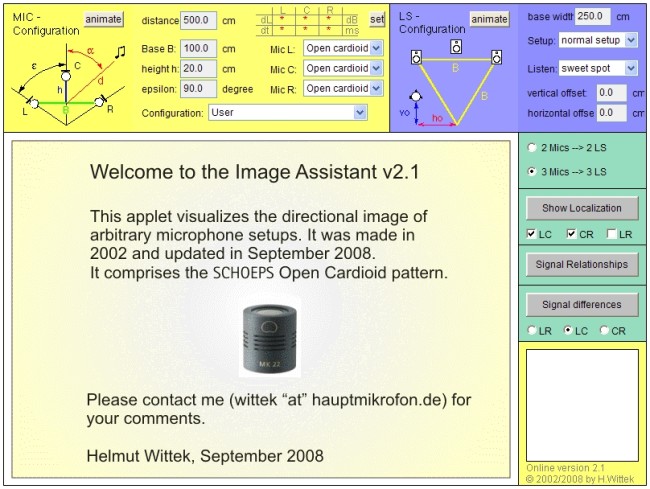
  • Image Assistant 2.1
  • Impressum/Imprint
New web design

Hauptmikrofon.de is presented in a new design. Furthermore, with this step comes also a refreshment regarding the contents of this site. New content is being prepared and current activities and investigations will be reported about. Please contact me for your ideas and wishes.

HW

Image Assistant

  • Image Assistant 2.1

Main

  • News
  • about us

Topics

  • AES-42 White Paper
    • Download German version
    • Download English version

Stereo

  • ORF Surround techniques

Ressources

  • The Binaural Sky
  • WFS (IRT literature)
  • Wittek publications
  • Theile publications
  • Master theses IRT 2000-2004
AES42 White Paper Print
Written by Administrator   
Thursday, 12 November 2009 00:48

White Paper "Digital Microphones and AES42"/"Digitale Mikrofone und AES42"

- German version v2.1, 11.05.2010
- English version v2.1, 11.05.2010

The authors of the White Paper "Digital microphones and AES42"  aim at providing an objective as possible view on the topic. On this basis, an introduction into and an assessment of this new technology is enabled.

Both the advantages and the drawbacks of the use of digital microphones shall be observed.

Except for special applications, e.g. in mobile phones, the current digital microphones for the professional audio business are based on the AES42 standard. This standard is an extension of the AES3 standard and is considered in this document.


Die Autoren des White Papers "Digitale Mikrofone und AES42" haben sich zum Ziel gesetzt, den Anwendern einen möglichst objektiven Blick auf die Thematik zu ermöglichen und so eine Einschätzung dieser neuen Technologie zu vereinfachen.

Dabei sollen die Vorteile als auch die möglichen Fallstricke bei der Arbeit mit digitalen Mikrofonen gleichermaßen betrachtet werden.
Abgesehen von Speziallösungen, z.B. für Mobiltelefone, basieren die heute erhältlichen Digitalmikrofone für den professionellen Audiomarkt zum größten Teil auf dem AES42-Standard. Dieser Standard ist eine Erweiterung des AES3-Standards und wird in diesem Dokument thematisiert.

 AES42 WhitePaper

Authors:

Claudio Becker-Foss, DirectOut
Stephan Flock, DirectOut
Helmut Jahne, StageTec
Christian Langen, SCHOEPS
Martin Werwein, LAWO
Helmut Wittek, SCHOEPS

Please This e-mail address is being protected from spambots. You need JavaScript enabled to view it (aes42 'at' hauptmikrofon.de) for your comments, proposals and criticism! The document will be regularly updated.


Index (English):


Introduction 1

1.     The history of digital studio microphones 2

1.1.       The first “digital microphone” 2

1.2.       The first digital studio microphone 2

1.3.       The first commercial success of digital microphone technology 4

1.4.       The path toward a standard digital microphone interface 4

1.5.       More recent developments 5

2.     What is a digital microphone? 6

2.1.       “Digital” or “digitalized”? 6

2.2.       Dynamic range 7

2.3.       A/D Conversion 9

2.3.1.       Introduction 9

2.3.2.       Multi-stage converter schemes 9

3.     The AES42 Standard 11

3.1.       Origin and Motivation of the Standard 11

3.2.       Operating data and protocols 11

3.2.1.       Powering 11

3.2.2.       Audio format 12

3.2.3.       Compatibility 12

3.2.4.       Synchronization 12

3.2.5.       Remote control 14

3.2.6.       DSP 16

4.     Practical issues in the use of digital microphones 17

4.1.       What AES42 controllers or interfaces exist? 17

4.2.       What is the difference between using digital and analog microphones? 17

4.2.1.       Latency 17

4.2.2.       Power consumption 18

4.2.3.       Cables 18

4.2.4.       Are digital microphones more complicated to use than analog microphones? 18

4.3.       Sampling rate conversion 18

4.3.1.       Necessity 18

4.3.2.       Operating principles and characteristics 19

4.3.3.       Modern sampling rate converters and audio quality 21

4.4.       Operational reliability 22

4.4.1.       Increased likelihood of failure due to greater complexity of the electronics? 22

4.4.2.       Electromagnetic compatibility and radio-frequency interference 22

4.4.3.       Phantom powering 22

4.4.4.       Humidity 22

4.4.5.       Cable capacitance 22

4.4.6.       Input impedance of the equipment to which the microphone is connected 23

4.4.7.       Synchronization 23

4.4.8.       Embedded software 23

4.4.9.       Summary 24

4.5.       Areas of application for digital microphones 24

5.     Future directions for digital microphones 26

5.1.       Compatibility with existing systems 26

5.2.       Investment costs (amplifiers, capsules, converters) 26

5.3.       Differences among implementations of the AES42 standard 27

5.4.       Which areas of application hold the future of digital microphones? 27

5.5.       How can digital microphones be made (still) more appealing to work with? 27

5.6.       Summary 28

Advantages of digital microphones: 28

Advantages of analog microphones: 28

Questions remain … 29

6.     The Authors 30

7.     Bibliography 31

8.     Table of Illustrations, Sources 32


Index (German):

Einleitung    1
1.    Geschichte der "digitalen" Studiomikrofone    2

1.1.    Das erste Digitalmikrofon    2
1.2.    Das erste digitale Studiomikrofon    2
1.3.    Erste kommerzielle Erfolge mit digitaler Mikrofontechnik    4
1.4.    Auf dem Weg zur normierten digitalen Mikrofonschnittstelle    5
1.5.    Neuere und aktuelle Entwicklungen    5

2.    Was ist ein digitales Mikrofon?    7

2.1.    Digital oder digitalisiert?    7
2.2.    Dynamik    8
2.3.    A/D-Wandlung    10
2.3.1.    Einleitung    10
2.3.2.    Mehrstufige Wandlerkonzepte    10

3.    Der AES42-Standard    12

3.1.    Entstehungsgeschichte des Standards/ Motivation    12
3.2.    Betriebsdaten und Protokolle    12
3.2.1.    Stromversorung    12
3.2.2.    Audioformat    13
3.2.3.    Kompatibilität    13
3.2.4.    Synchronisation    13
3.2.5.    Fernsteuerung    15
3.2.6.    DSP    17

4.    Praktische Fragen beim Betrieb digitaler Mikrofone    19

4.1.    Welche AES42-Controller/ Interfaces gibt es?    19
4.2.    Was ist der Unterschied bei der Anwendung digitaler und analoger Mikrofone?    19
4.2.1.    Latenz    19
4.2.2.    Leistungsaufnahme    20
4.2.3.    Kabel    20
4.2.4.    Ist es ist komplizierter, digitale Mikrofone einzusetzen als analoge?    20

4.3.    Samplerate Converter    20
4.3.1.    Notwendigkeit    20
4.3.2.    Funktionsweise und Eigenschaften    21
4.3.3.    Die Qualität eines modernen Sample Rate Converters    23

4.4.    Betriebssicherheit    24
4.4.1.    Ausfallwahrscheinlichkeit aufgrund höherer Komplexität der Elektronik?    24
4.4.2.    EMV und hochfrequente Einstreuungen    25
4.4.3.    Phantomspeisung    25
4.4.4.    Luftfeuchtigkeit    25
4.4.5.    Kabelkapazitäten    25
4.4.6.    Eingangsimpedanzen der angeschlossenen Geräte    25
4.4.7.    Synchronisation    25
4.4.8.    Eingebettete Software    26
4.4.9.    Zusammenfassung    26

4.5.    Anwendungsgebiete für digitale Mikrofone    27

5.    Quo vadis Digitalmikrofon?    28

5.1.    Kompatibilität zu bestehenden Systemen    28
5.2.    Investitionskosten (Verstärker, Kapseln, Converter)    28
5.3.    Unterschiede in der Implementierung des AES42-Standards    29
5.4.    In welchen Anwendungsbereichen liegt die Zukunft des Digitalmikrofons?    29
5.5.    Wie kann das Arbeiten mit Digitalmikrofonen (noch) attraktiver gestaltet werden?    30
5.6.    Fazit    30

6.    Die Autoren    32
7.    Literaturhinweise    33
8.    Abbildungsverzeichnis    34


Last Updated on Wednesday, 12 May 2010 08:59
 

hauptmikrofon.de, Designed by Zuczkowski Media Design Solutions and sponsored by programy partnerskie